
- Home
- Technical College
- CORELESS MOTORS
- Coreless Motors: The Driving Force of Dexterous Robotic Hands
Coreless Motors: The Driving Force of Dexterous Robotic Hands
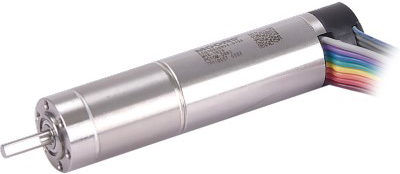
As intelligent robots evolve toward more service-oriented and interactive applications, their hands are gaining human-like dexterity and precision control. Achieving such fine motor skills and agile grasping requires high-performance actuation systems. Among the available motor technologies, coreless motors — featuring an ironless rotor design — deliver distinct advantages, making them a preferred choice for powering dexterous robotic hands. 
Technical Advantages of Coreless Motors
Dexterous robotic hands impose stringent requirements on their drive motors — compact dimensions, high torque density, rapid response, and precise motion control. Coreless motors are ideally suited to meet these performance demands, delivering the responsiveness and accuracy essential for fine manipulation. 1. Miniaturized Design: Coreless motors can achieve diameters below 10 mm and be embedded directly into finger joints, saving space and improving packaging density. 2. High Responsiveness and Low Rotational Inertia: The ironless rotor drastically reduces rotational inertia, enabling millisecond-level start/stop performance. This allows robotic fingers to execute grasping, releasing, and rotational movements within milliseconds, greatly enhancing agility. 3. High-Precision Control: Coreless motors exhibit negligible cogging torque, providing smooth rotation and micro-angle positioning. When paired with high-resolution encoders (incremental or absolute), they enable smooth, finger-like motion and compliant control — a prerequisite for human-like manipulation. 4. High Performance and Energy Efficiency: With high power density, excellent efficiency, and fast rotational speed, coreless motors deliver strong dynamic performance while conserving energy. Their smooth, low-noise operation and high energy efficiency make them ideal for long-duration, continuous applications in noise-sensitive and energy-conscious environments such as medical and household service robots. 5. Modularity and Distributed Control: When integrated with driver ICs, coreless motors reduce wiring complexity and meet the distributed control requirements of multi-DOF dexterous hands. This modular drive approach simplifies system architecture and enhances overall reliability. 6. Excellent Integration Compatibility: Coreless motors can be compactly combined with multi-stage planetary gearheads and micro harmonic reducers to form compact drive modules, offering outstanding flexibility for system integration.Applications of Coreless Motors in Dexterous Robotic Hands
The dexterous hand is a key component of a robotic actuation system, typically consisting of coreless motors, precision planetary gearheads, ball screws, sensors, and encoders. Among these, the coreless motor and planetary gearhead form the core of the finger actuation mechanism. Finger motion is driven by the rotation of the coreless motor, which transmits torque through the planetary gearhead to generate reactive force. This force, transferred via hinges and linkages, pulls the finger joints—converting rotational motion into linear movement. By applying forward or reverse voltage, each finger can extend or retract, allowing it to grasp or release objects as needed. Coreless motors endow the fingers with smooth and flexible motion. Each dexterous hand is driven by six motor modules: two coreless motor units in the thumb enable simultaneous extension and rotation, while one motor module drives each of the remaining four fingers. Working together with worm gears and tendon mechanisms, these six modules provide precise actuation and high dexterity, allowing the robotic hand to perform complex manipulation tasks with exceptional accuracy.Coreless Motor Application Scenarios
Bionic Dexterous Hands: Coreless motors are widely employed to drive the finger joints of biomimetic robotic hands. They deliver human-like grip force control and coordinated finger motion, allowing the hand to gently lift delicate objects or firmly grasp tools. This capability is crucial for service robots, rehabilitation devices, and teleoperated robotic manipulators. Medical Rehabilitation and Prosthetics: In advanced prosthetic limbs and rehabilitation devices, coreless motors enable smooth, natural joint motion that closely mimics human movement. Controlled through electromyographic (EMG) signals or sensor feedback, the motors execute precise hand and finger actions, greatly enhancing comfort, control, and overall quality of life for users. Industrial Robot Micromanipulation: In precision assembly and electronic component handling, dexterous robotic hands must perform highly accurate operations within extremely limited spaces. The fast response and superior stability of coreless motors ensure consistent performance and reliability, even in high-speed production environments. Thanks to their lightweight design, rapid response, high precision, and low noise, coreless motors have become a key driving technology for dexterous robotic hands and joint actuators. They not only enhance the agility and human-like motion of robots, but also lay a strong foundation for advancements in service robotics, medical prosthetics, and industrial automation.Brushless Coreless Motor Series for Dexterous Hands
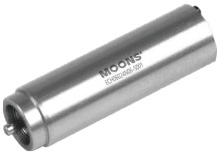
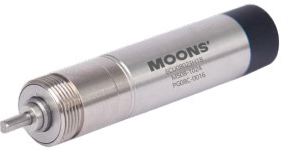
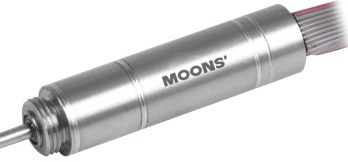
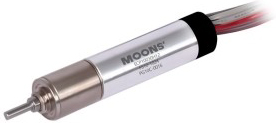
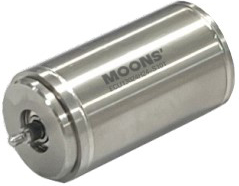
MOONS' brushless coreless motors feature patented coreless winding technology, enabling compact design, high power density, and optimized magnetic circuits. The series delivers high-speed, high-torque performance, with negligible cogging for smooth, low-noise operation and precise motion control. Their compact structure, low thermal rise, and high efficiency support lifespans exceeding 20,000 hours, making them ideal for applications demanding both performance and reliability.Brushless Coreless Motor ECH06024
Miniaturized Design: Diameter: 6 mm | Length: 20 mm | Weight: 7.3 g High-Speed Performance: No-load speed: 63,000 rpm | Maximum permissible speed: 80,000 rpm
Brushless Coreless Motor ECH08023
Compact Design: Diameter: 8 mm | Length: 23mm | Weight: 11.3g Low Inductance: Enables high dynamic response and rapid acceleration
Brushless Coreless Motor ECH10025
Superior Lightweight: Weight: 4.6 g | Rotor inertia: 0.05 g•cm2 High-Speed Performance: No-load speed: 31,900 rpm | Maximum permissible speed: 65,000 rpm
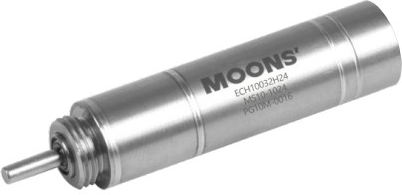
Brushless Coreless Motor ECH10032
Superior Lightweight: Weight: 18.2 g | Rotor inertia: 0.08 g•cm2 High-Speed Performance: No-load speed: 50,000 rpm | Maximum permissible speed: 65,000 rpm
Brushless Coreless Motor ECP10030
Performance: No-load speed: 26,500 rpm | Maximum continuous torque: 2.3 mNm — delivering reliable and precise power
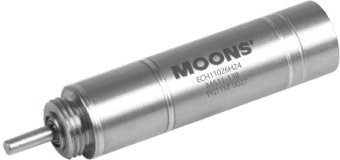
Brushless Coreless Motor ECH11026
Superior Lightweight: Weight: 18.5 g | Rotor inertia: 0.14 g•cm2 High-Speed Performance: No-load speed: 31,000 rpm | Maximum permissible speed: 65,000 rpm
Brushless Coreless Motor ECU13024
Compact Structure: Body length: 24 mm | Rated power: 4 W | Maximum continuous torque: 3.3 mNm | No-load speed: 18,000 rpm
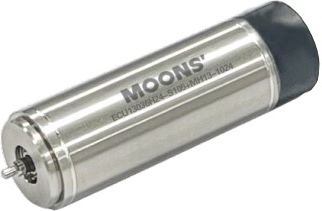
Brushless Coreless Motor ECU13036
Compact Structure: Body length: 36 mm | Rated power: 10 W | Maximum continuous torque: 8.1 mNm | No-load speed: 16,000 rpm
Brushless Coreless Motor ECU16036
Compact Structure: Body length: 36 mm | Rated power: 14 W | Maximum continuous torque: 10 mNm | No-load speed: 15,000 rpm