
Servo Motor vs Normal Motor: What's the Difference?
In today's industrial automation and precision control fields, motors serve as core power components, and their performance plays a crucial role in the operating efficiency and accuracy of various equipment. Servo motors and normal motors are common drive devices. While they share certain functional similarities, they differ fundamentally in terms of design principles, control methods, and application scenarios. This article will provide an in-depth analysis of the differences between servo motors and normal motors, focusing on four aspects: technical principles, performance characteristics, application fields, and product selection. 
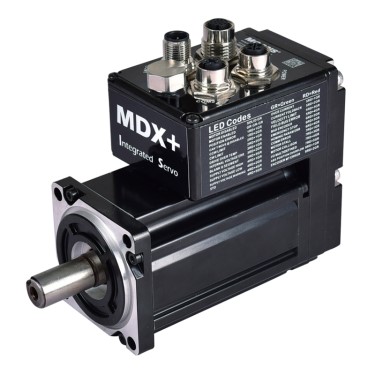 MBDV Series Low-voltage DC Servo Motors The MBDV series low-voltage servo motors feature a new magnetic circuit design that improves motor efficiency by approximately 4% at rated output. These motors are equipped with a 16-bit high-resolution encoder, which effectively reduce speed fluctuations. Additionally, the dual-encoder model meet safety function requirements. The motor has an IP65 protection rating (excluding the shaft through part). Product Details
 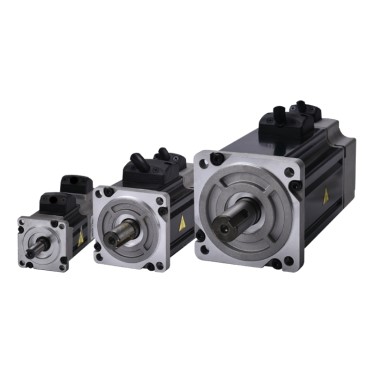 MBDV Series Low-voltage DC Servo drives Compact Size/Dual-axis design The MBDV DC input servo motor drive is a new generation of low-voltage DC input, high-performance servo system products. The driver utilizes advanced all-digital motor control algorithms to achieve high-precision control of servo motor position, speed, and torque. This series offer a power range from 100W~3000W and features both single and dual-axis versions with a compact design. It uses direct plug connectors for easy wiring, requires no manual adjustment of gain parameters, supports automatic tuning, and simplifies debugging. Additionally, it supports CANopen and RS485 industrial field buses. Product Details
 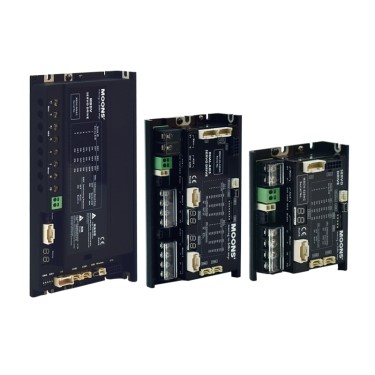 M56S Series High-End AC Input Servo Drives The M56S series is a new generation of high-end 220V/400V AC input servo system. The power range of this series spans from 50W to 7.5KW. The drive adopts advanced motion control algorithms, coupled with a 26-bit high precision encoder motor, and offers a velocity loop bandwidth of up to 3.5KHz. It supports industrial field buses including EtherCAT, CANopen, Modbus, EtherNet/IP, and Profinet. Additionally, the system efficiently adjusts loop gain automatically and provides superior vibration suppression and external disturbance compensation. Product Details
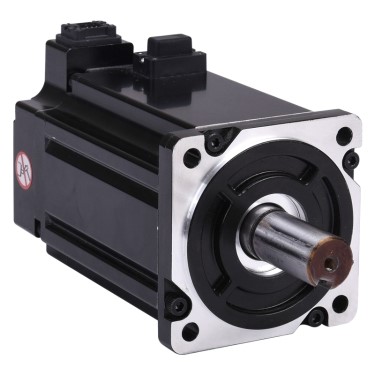
 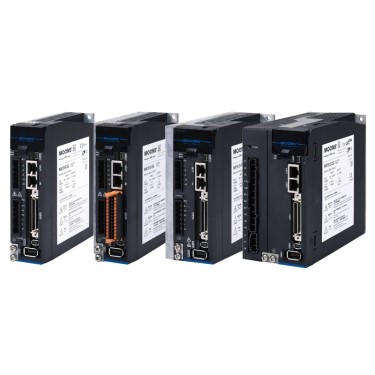 SM3 Series Servo Motors The SM3 series AC servo motor have an insulation rating of Class F (155℃) and are equipped with high-resolution absolute/incremental encoder. The protection rating is IP65 (excluding the shaft through part). The power range of this series spans from 100W to 7.5KW, and can be paired with M3, M54S, and M56S series servo motor drivers to achieve full closed-loop control. Product Details
  In summary, servo motors are gradually replacing normal motors in high-end manufacturing and automation fields, becoming the core drive solution due to their closed-loop control, high dynamic response, and intelligent features. While servo motors tend to be relatively expensive, they offer significant comprehensive benefits in application scenarios that require high precision and operate in complex environments.
1. Servo Motor vs Normal Motor: What's the Difference?
1) Differences in Structural Composition and Control Principle. Common normal motors include AC induction motors and DC motors, which mostly use open-loop control mode. During operation, the speed is primarily adjusted by regulating the input voltage or current. Its structure is relatively simple, consisting mainly of basic components such as stator, rotor, and brush (DC motor). These motors do not provide real-time feedback on its operating status during operation. The servo motor operates within a closed-loop control system, consisting of three main components: the motor body, a high-precision encoder, and a controller. The encoder continuously monitors the rotor's position and speed, feeding this data back to the controller. Using this feedback, the controller adjusts the output signal based on specific algorithm, ensuring precise control over the motor's position, speed, and torque. 2) Difference between dynamic response performance and control accuracy Normal motors exhibit relatively slow dynamic response, with their speed and torque being significantly affected by load changes. The speed control accuracy typically remains within a range of ±5%. In contrast, with the help of closed-loop control technology, the dynamic response time of servo motors can achieve a much faster dynamic response time, shortening to milliseconds. The positioning accuracy can reach ±0.01 pulse increments, and torque fluctuations are kept under 1%. This enables servo motors to excel in work environments that require frequent, rapid start and stop, as well as high-precision positioning. 3) Differences in applicable load characteristics Normal motors can operate stably under constant load conditions, but once the load changes or the operating conditions require frequent starts and stops, they are prone to issues such as stalling and overheating. In contrast, servo motors are equipped with adaptive algorithms that allow them to optimize output in real-time based on load variations. For example, in scenarios involving dynamic load variations such as the rapid movement of industrial robot joints or the precise cutting in CNC machines, servo motors leverage their advantages to ensure the stable operation of equipment.2. Core advantages of servo motors
1) High precision and high-speed response characteristics The closed-loop control mechanism of the servo motor provides significant advantages in position, speed, and torque control. In the field of Computer, Communication, and Consumer Electronics (3C) manufacturing, servo motor can drive robotic arms to perform chip installation with ultra-high precision of 0.01mm, and the response time is only a few milliseconds, which fully meets the industry's demands for high-precision and high-speed production. 2) Energy-saving and high-efficiency characteristics Servo motors have the capability to intelligently adjust output power, automatically reducing energy consumption when lightly loaded or in standby mode. Actual tests shows that their overall energy efficiency is 20%-40% higher than that of normal motors. In the application of injection molding machines, high-quality servo systems can reduce equipment power consumption by 30%, effectively enhancing energy utilization efficiency. 3) Stability and reliability Servo motors are equipped with built-in overload protection, temperature monitoring, and other functional modules, allowing them to operate stably for extended periods in harsh working environments such as high temperatures and high humidity. Their mean time between failures (MTBF) typically exceeds 100,000 hours, while the mean time between failures of normal motors is only around 50,000 hours, highlighting a significant difference in reliability between the two.3. Typical application areas of servo motors
1) Industrial Automation In industrial robotics, servo motors serve as the driving core of the robot arm, enabling multi-axis linkage control and meeting the stringent movement requirements of complex processes such as welding and assembly. In the field of CNC machine tools, servo motors rely on high-precision positioning capabilities to ensure that the error of processed precision parts is controlled at the micron level, significantly enhancing processing accuracy and product quality. 2) Smart device field In the medical equipment industry, such as in the rotating mechanism of CT scanners, servo motors are essential for provide stable and precise control of angular velocity to ensure imaging accuracy. In the semiconductor manufacturing field, the wafer positioning system in lithography machine relies on servo motors to achieve nanometer-level precision, offering critical support for the high-precision process involved in chip manufacturing. 3) New energy and transportation fields In the electric drive system of electric vehicles, servo motors are used for torque vector control, significantly enhancing the vehicle's handling performance and driving stability. During drone flight, servo motors adjust the propeller speed in real-time through high-speed responsiveness, ensuring that the drone maintains a stable flight attitude under various flight conditions.4. Introduction to MOONS' Servo Motor Products
MDX Plus Series Integrated Servo Motors The MDX+ series is a low-voltage servo systems that integrate a servo drive, servo motor and encoder feedback, and more into a single package. Power options range from 100W to 750W (100/200/400/550/750W). This series supports communication methods including pulse, (Pulse&Dir, CW/CCW, encoder following), RS485, CANopen, EtherNet/IP, and EtherCAT, and includes models with electromagnetic brakes and STO (Safe Torque Off) for enhanced safety and reliability. It is widely used in industries such as logistics equipment, medical instruments, AGVs, new energy, photovoltaics, semiconductors, and 3C electronics. Product Details MBDV Series Low-voltage DC Servo Motors The MBDV series low-voltage servo motors feature a new magnetic circuit design that improves motor efficiency by approximately 4% at rated output. These motors are equipped with a 16-bit high-resolution encoder, which effectively reduce speed fluctuations. Additionally, the dual-encoder model meet safety function requirements. The motor has an IP65 protection rating (excluding the shaft through part). Product Details MBDV Series Low-voltage DC Servo drives Compact Size/Dual-axis design The MBDV DC input servo motor drive is a new generation of low-voltage DC input, high-performance servo system products. The driver utilizes advanced all-digital motor control algorithms to achieve high-precision control of servo motor position, speed, and torque. This series offer a power range from 100W~3000W and features both single and dual-axis versions with a compact design. It uses direct plug connectors for easy wiring, requires no manual adjustment of gain parameters, supports automatic tuning, and simplifies debugging. Additionally, it supports CANopen and RS485 industrial field buses. Product Details M56S Series High-End AC Input Servo Drives The M56S series is a new generation of high-end 220V/400V AC input servo system. The power range of this series spans from 50W to 7.5KW. The drive adopts advanced motion control algorithms, coupled with a 26-bit high precision encoder motor, and offers a velocity loop bandwidth of up to 3.5KHz. It supports industrial field buses including EtherCAT, CANopen, Modbus, EtherNet/IP, and Profinet. Additionally, the system efficiently adjusts loop gain automatically and provides superior vibration suppression and external disturbance compensation. Product Details SM3 Series Servo Motors The SM3 series AC servo motor have an insulation rating of Class F (155℃) and are equipped with high-resolution absolute/incremental encoder. The protection rating is IP65 (excluding the shaft through part). The power range of this series spans from 100W to 7.5KW, and can be paired with M3, M54S, and M56S series servo motor drivers to achieve full closed-loop control. Product Details In summary, servo motors are gradually replacing normal motors in high-end manufacturing and automation fields, becoming the core drive solution due to their closed-loop control, high dynamic response, and intelligent features. While servo motors tend to be relatively expensive, they offer significant comprehensive benefits in application scenarios that require high precision and operate in complex environments.