
- Home
- Technical College
- MOTOR TECHNOLOGY
- The Difference Between Nominal Speed, Rated Speed, Maximum Continuous Speed, and Peak Speed of a Motor
The Difference Between Nominal Speed, Rated Speed, Maximum Continuous Speed, and Peak Speed of a Motor
When analyzing a motor's operating characteristics, four core speed parameters must be considered: nominal speed, rated speed, maximum continuous speed, and peak speed. Although all relate to the motor's rotational speed range, each serves a distinct purpose—theoretical reference, design benchmark, long-term operational limit, and transient performance boundary. To avoid performance misjudgment or operational risks caused by conceptual confusion, these parameters must be clearly distinguished in the context of specific working conditions and application scenarios. 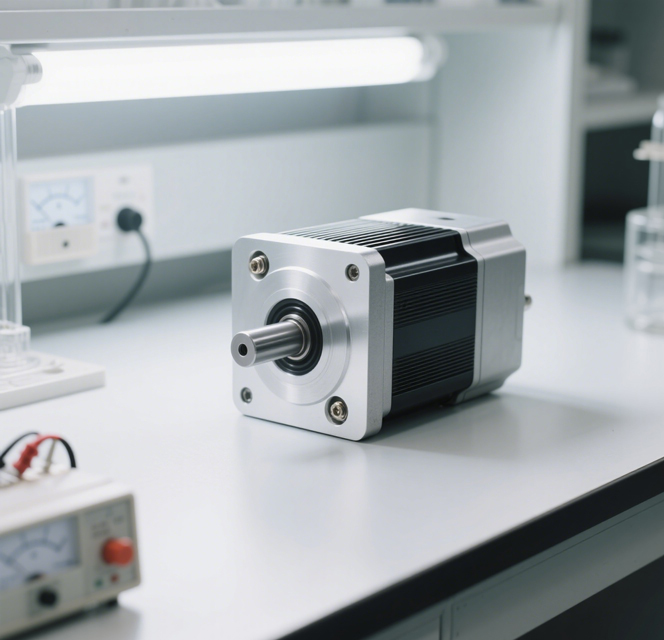
When distinguishing between a motor's nominal speed, rated speed, maximum continuous speed, and peak speed, several key considerations should be kept in mind. In practical applications, long-term operation must remain strictly within the rated or maximum continuous speed range. Over-speed can lead to mechanical failure or insulation breakdown. In variable-frequency drives (VFDs) applications, the difference between the maximum continuous speed and the peak speed represents the available speed margin. This margin should be carefully evaluated in conjunction with actual working conditions during motor selection.
1. Nominal speed of the motor
Nominal speed refers to the theoretical synchronous speed of a motor, determined by its number of poles and the frequency of the power supply. It is calculated using the formula n = 60f/p (where n is the speed, f is the frequency, and p is the number of pole pairs). Calculation example: Under a 50Hz power supply, the synchronous speed of a 2-pole motor (p=1) is 3000 rpm, and the synchronous speed of a 4-pole motor (p=2) is 1500 rpm. In the real-world operation, the actual speed is typically slightly lower than the synchronous speed due to load-induced slip.2. Rated speed of the motor
The rated speed of a motor refers to the speed at which the motor can operate stably and continuously under rated voltage and load conditions. It is characterized by the following: Optimal Efficiency: aligns with transmission system requirements while maintaining high energy efficiency. Thermal Equilibrium: Ensures a controlled temperature rise during prolonged operation, preventing overheating and damage. Performance Benchmark: The value marked on the motor nameplate, serving as a reference for equipment selection and application matching. Calculation example: The rated speed of a 4-pole asynchronous motor is generally 1440 rpm (synchronous speed 1500 rpm).3. Maximum continuous speed of the motor
The maximum continuous speed of a motor refers to the highest speed at which the motor can operate continuously without sustaining damaged—distinct from the short-term peak speed limit. Its characteristics include: Above Rated Speed: Achievable through speed regulation or field weakening control, though typically at the cost of reduced efficiency. Limiting Factors: Constrained by mechanical and thermal considerations such a bearing lifespan, rotor dynamic balance, and the heat dissipation capacity of windings. Application scenarios: Speed regulation requirements under special working conditions, such as variable frequency drive systems. Important Note: Prolonged operation above rated speed may accelerate insulation aging or lead to a drop in output torque.4. Peak Speed (limited short-term speed)
The peak speed refers to the absolute maximum speed a motor can withstand for a short duration. It is important to note the following: Transient Characteristics: only used for testing or emergency conditions (such as rapid response requirements). Risk Warning: Prolonged operation at peak speed can accelerate insulation aging and exacerbate mechanical wear. Design Boundary: Represents the upper limit of the motor's design and manufacturing capabilities, such as the demagnetization resistance of permanent magnets.Comparison of the differences between the four speeds
| Parameter Type | Physical Meaning | Duration | Constraints | Typical Applications |
| Nominal speed | Theoretical synchronous speed (ideal value without load) | Has no practical significance | Determined only by the number of poles and frequency | Design reference |
| Rated speed | Calibration value for long-term stable operation | Unlimited continuous operation | Heat dissipation, efficiency, load matching | Conventional industrial equipment |
| Maximum continuous speed | Continuous operation safety limit | Long-term controllable operation | Mechanical strength, temperature rise limit | Variable frequency speed regulation system |
| Peak speed | Short-term test or emergency limit | Transient operation (seconds-level) | Material limit, instantaneous heat dissipation capacity | Performance testing or emergency scenarios |